‘Whose Court’ clarity: Redesigning a bidding platform.
My role
Product design, user research
Team
product manager, 3 engineers
Timeline
The goal was customer adoption. A platform full of data means nothing if customers call ops instead of using it. Success meant customers actually logging in and taking action themselves.
6 → 11
customer increase in platform adoption
60%
reduction in ops status inquiries
Q3 2025
shipped to pilot customers
My contribution:
Led the end-to-end platform redesign
Established core design principles ("Whose Court" clarity, proactive status)
Shaped the product roadmap based on research findings
Built functional prototype enabling investor and sales calls
Led testing with 5+ customers
01
The Problem
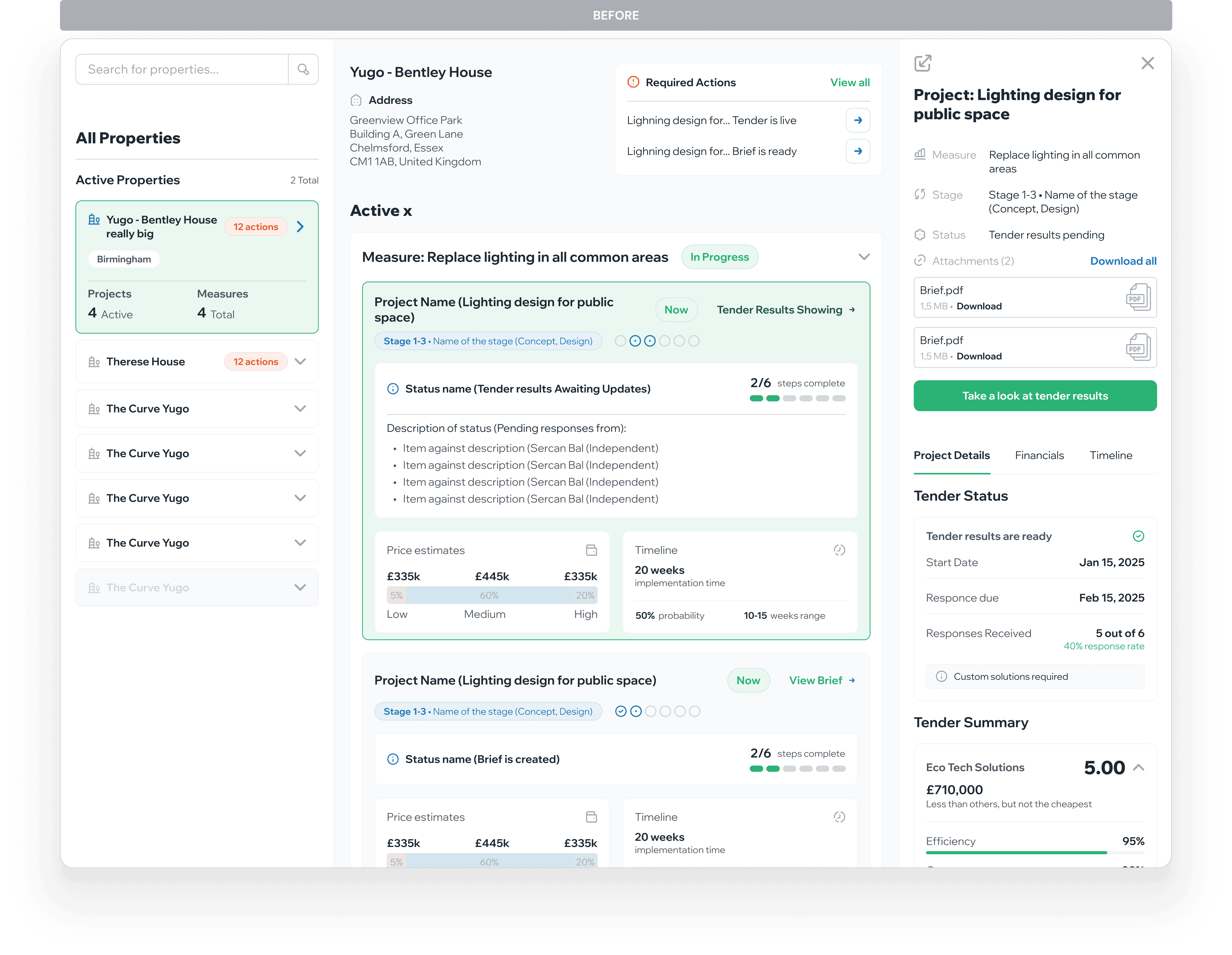
The platform had everything. Customers used nothing.
Their constant questions:
The impact:
Operations spent 60% of their time answering questions the platform already showed.
02
Research & Design Approach
What I did:
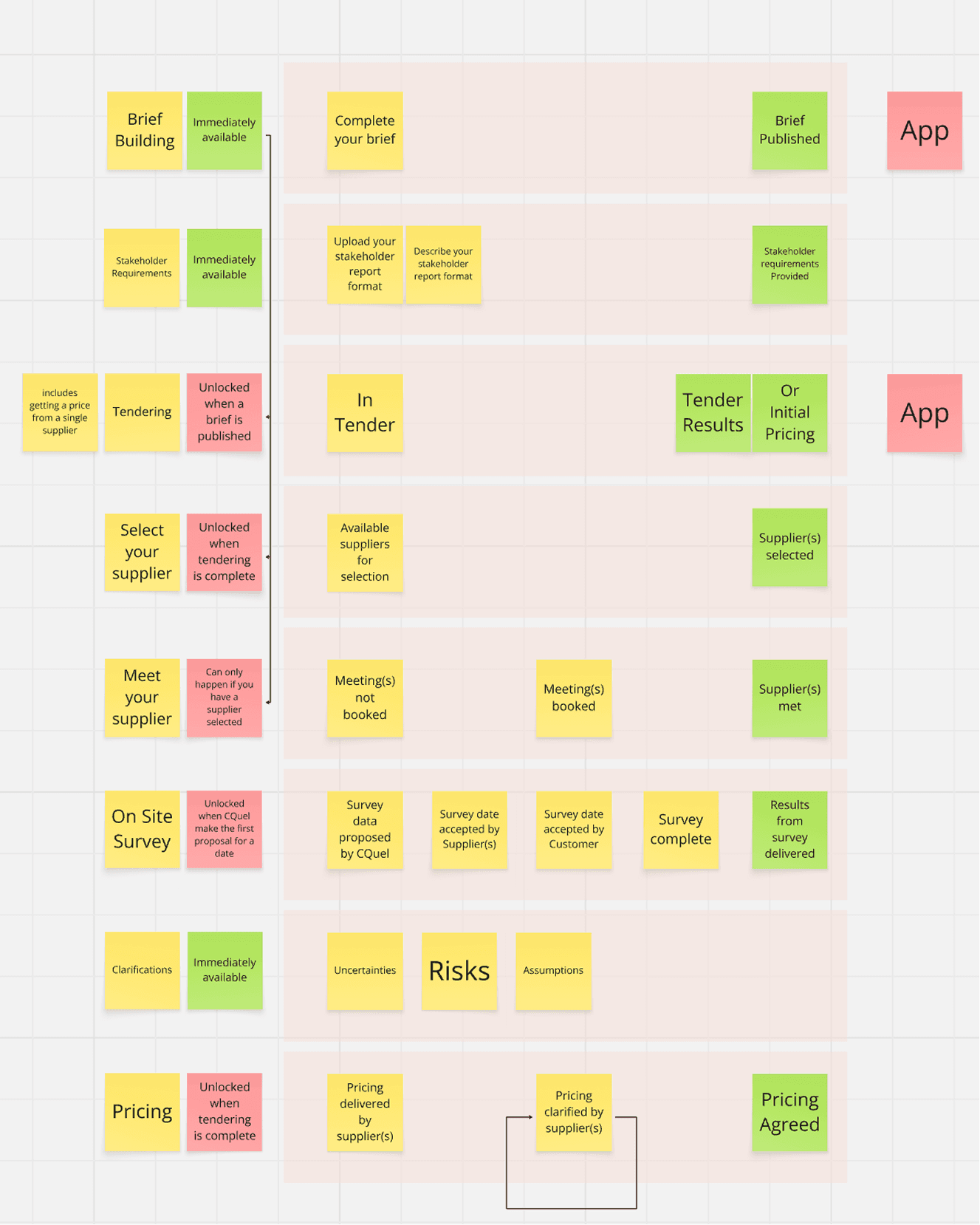
Shadowed 20+ customer calls with the operations team
Analysed platform usage patterns and drop-off points
Mapped actual customer workflows
Tested early concepts with real users
The turning point:
Testing with a sustainability manager revealed the real need:
"What I really need is to see multiple projects in one view – something I can present to senior leaders."
Pattern identified:
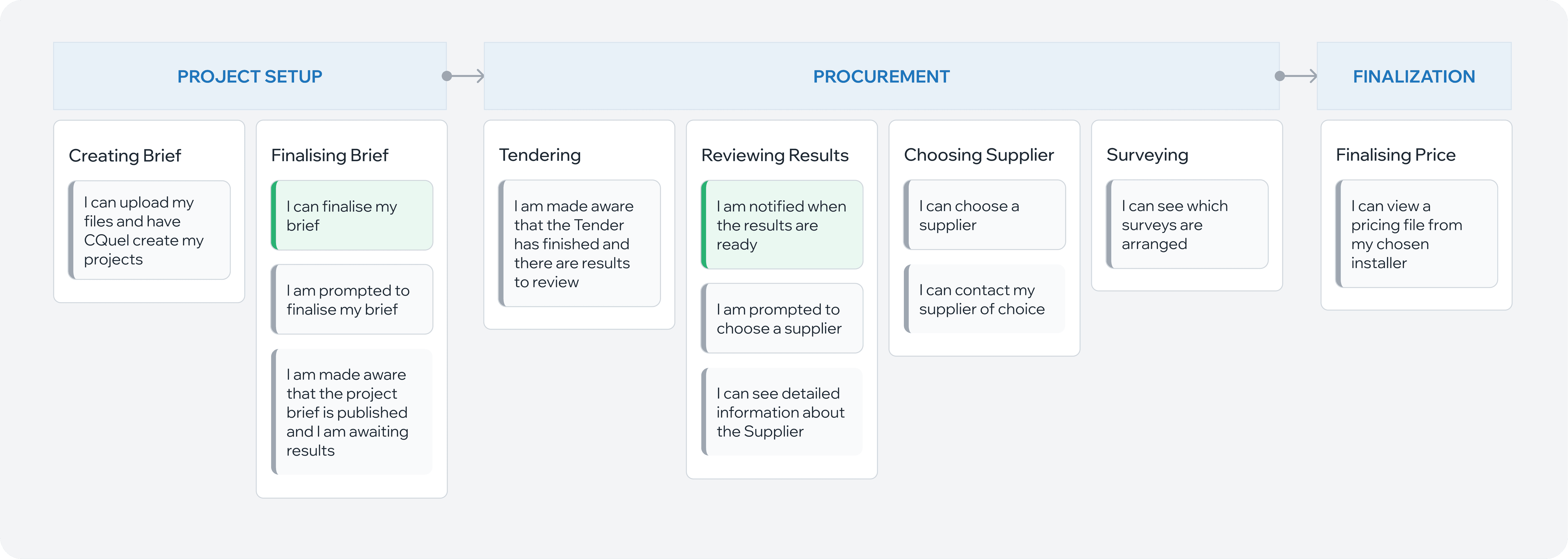
Customers weren't asking for more data. They needed narrative clarity– a dashboard that tells them what's happening and what to do next.
03
The Solution
Design approach:
Design principles:
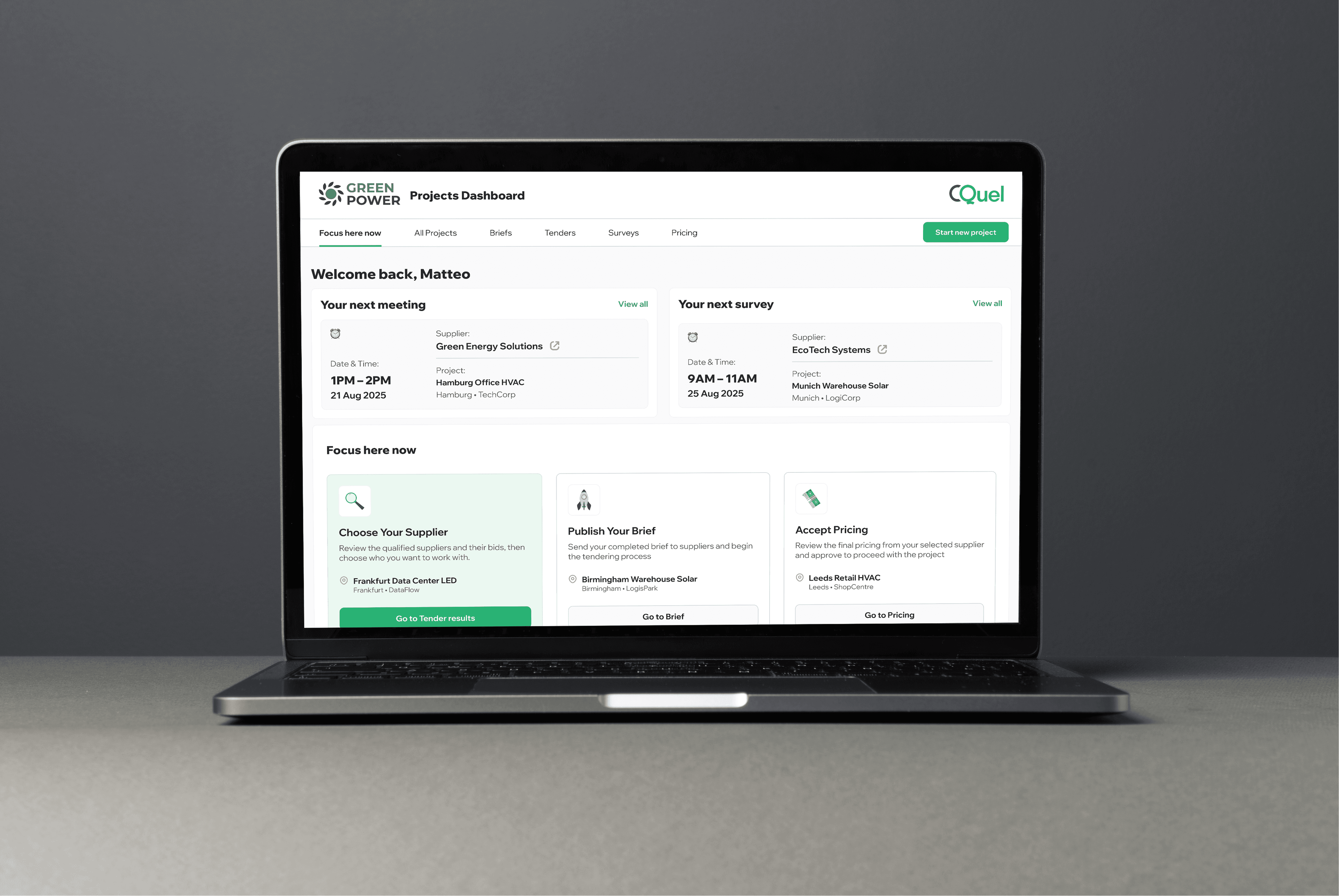
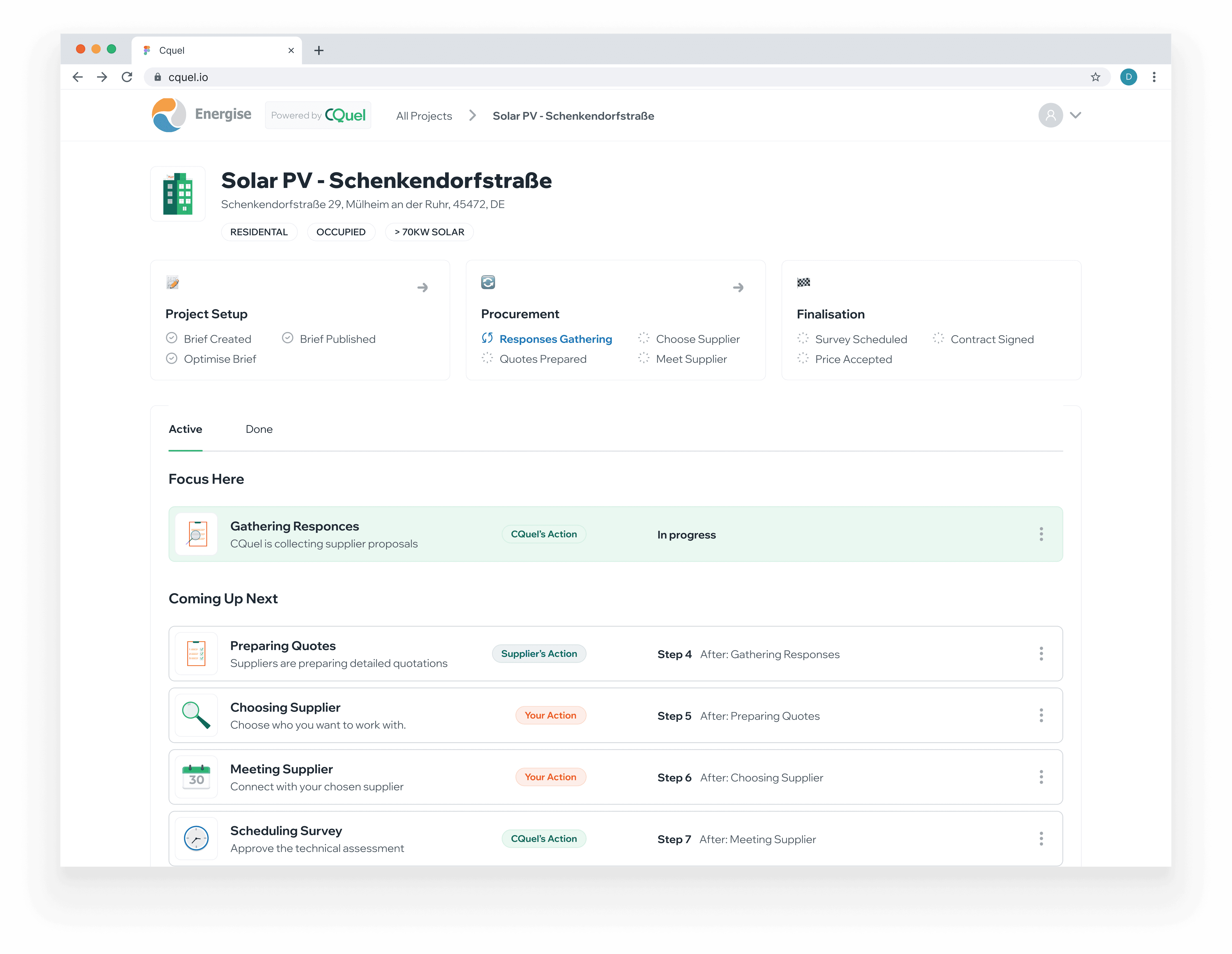
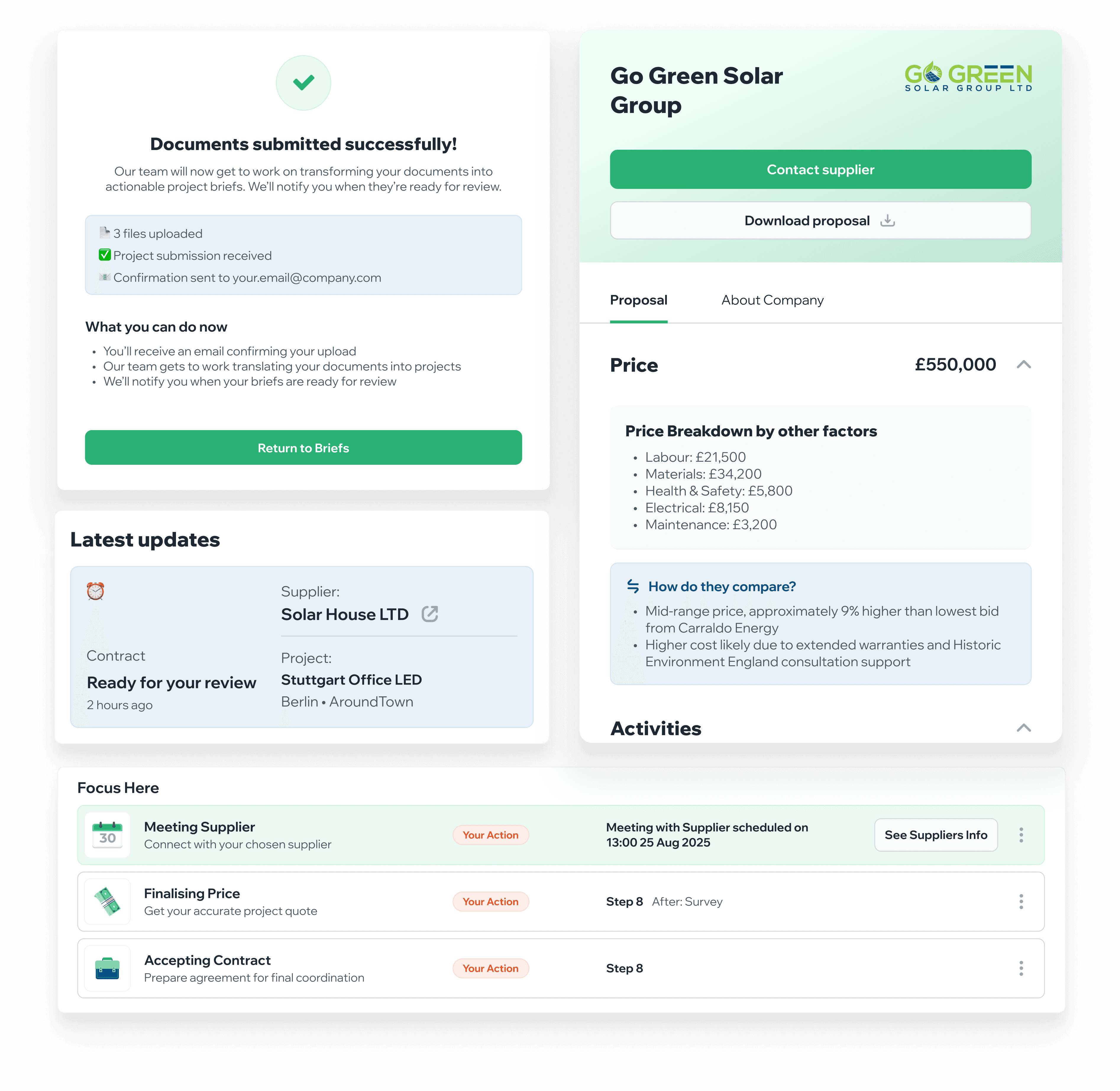
Your next meeting
View all
⏰
Date & Time:
13:00 – 14:00
21 Aug 2025
Supplier:
Green Energy Solutions
Project:
Hamburg Office HVAC
Hamburg • TechCorp
🔄
Procurement
Responses Gathering
Quotes Prepared
Choose Supplier
Meet Supplier
04
What I Designed
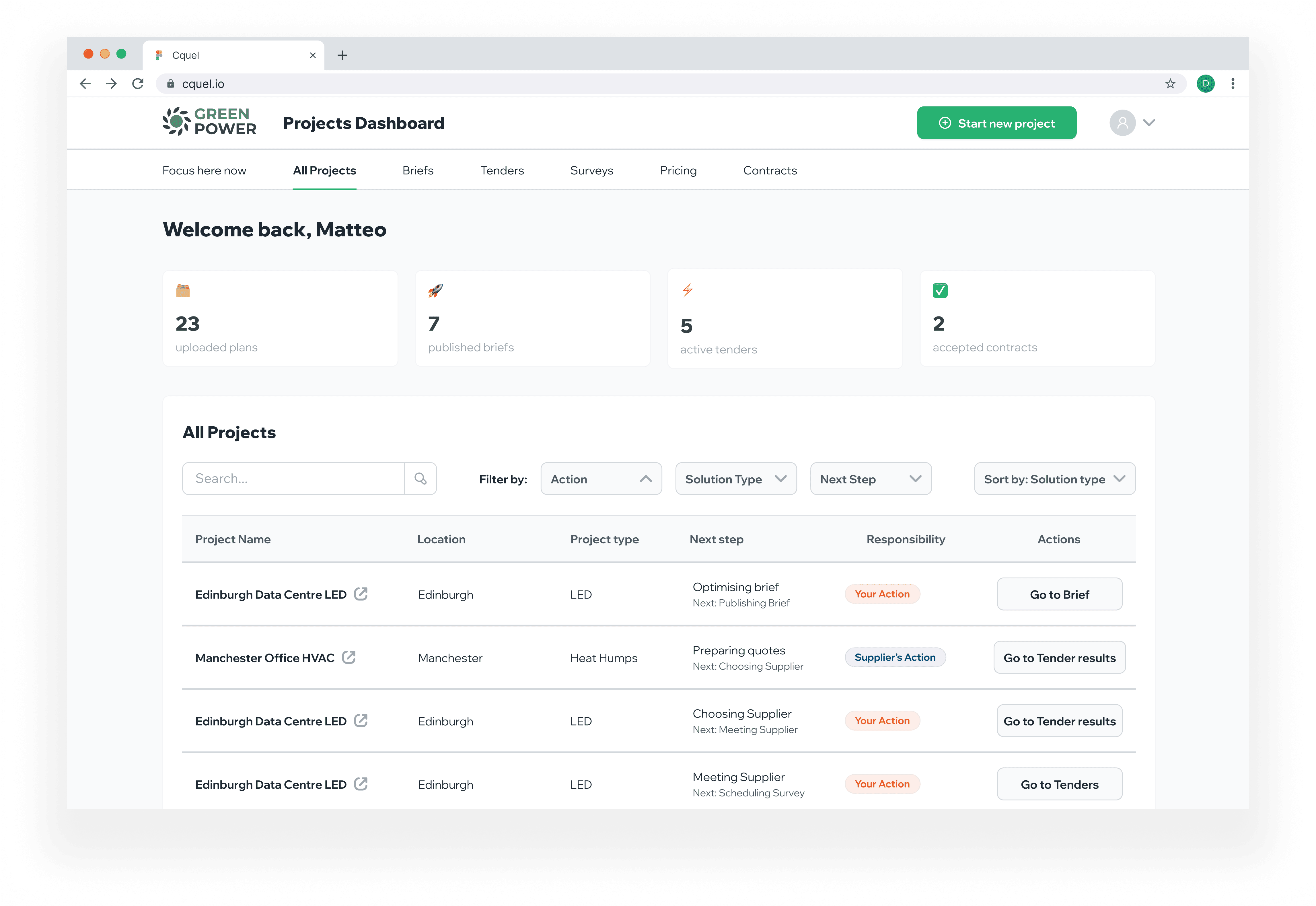
A dashboard that shows customers what needs their attention now, whose turn it is to act, and what to do next – organised around their actual workflow, not our data structure.

02
Testing
Rapid Prototyping: Testing Before Building
The constraint:
Limited dev resources and tight timeline – we couldn't afford to build the wrong thing.
My Process:
Designed in Figma
Built functional prototype in Cursor
Fully clickable with realistic data
Good enough to demo to real clients
Tested with customers while CEO used it for sales
What happened:
The prototype became our sales tool:
CEO presold the platform before development started
Real clients shaped the product:
Tested with 5+ customers, iterating based on actual reactions
Features emerged from user needs:
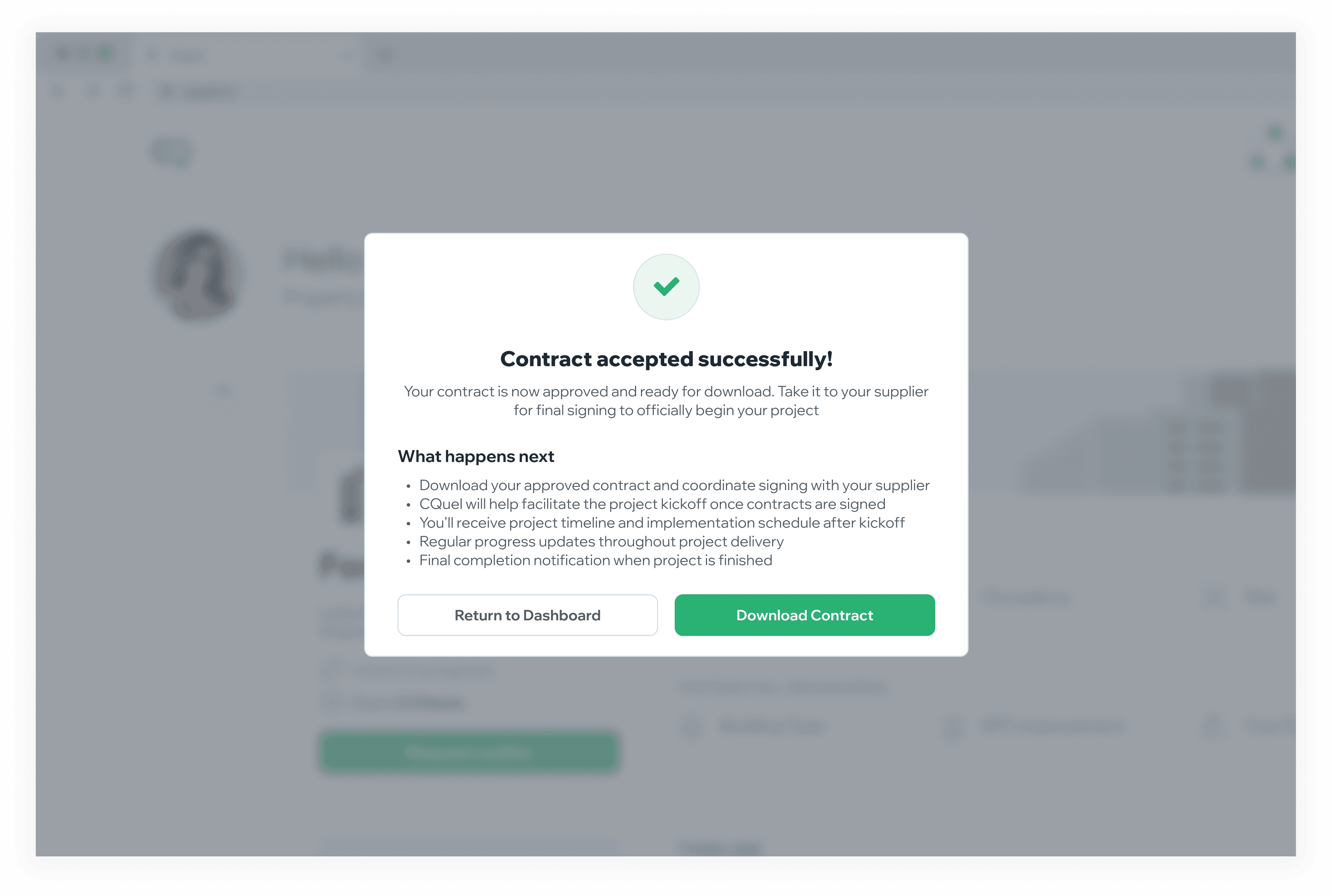
"If you can show me this, can I also sign here?"
Added contract signing based on this single question
The win:
Validated the redesign, shaped the roadmap, and closed deals – all before writing production code.
05
Impact
Reduced operational burden:
60% reduction in status inquiry emails to ops team
Customer adoption:
83% increase in platform adoption (6 → 11 active customers)
Business enablement:
Prototype enabled investor and sales calls before dev shipped
Platform shipped Q3 2025, currently used by pilot customers
06
Key Learnings
Interpretation beats information:
Customers had all the data. They needed someone to tell them what it meant.
Prototype for validation AND sales:
5 days of Cursor work enabled testing, investor demos, and presales simultaneously.
Design principles unify decisions
"From reactive to proactive" and "whose court" became our north star. Every feature decision ran through these principles.